Ideas
Why a drawing remembers differently than a photo
· 4 min read · By the Folumi team
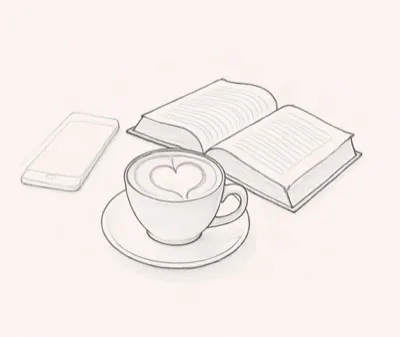
A photo records everything the lens could see. A memory keeps almost none of it. When you think back to a morning in a café, you don’t see the receipt on the table or the stranger in the background. You remember the warmth of the cup and the light on the page you were reading. A drawing works the same way, and that’s why it can feel closer to remembering than the photo it came from.
Drawings leave things out
An illustrator decides what matters and lets the rest fade. Cluttered backgrounds soften, colours settle into a palette, and the subject comes forward. Memory does the same editing on its own. Looking at a drawing of your day can feel like looking at the version you carry in your head, not the one your phone stored.
A style is a mood
The same evening at the beach reads differently in each style:
- Pencil feels quiet and reflective, like something written down by hand.
- Watercolor feels soft and warm, good for gentle days and people you love.
- Anime film stills make an ordinary afternoon cinematic.
- Blocks turn a day into play.
- 35mm film adds grain, warmth and a date stamp, the way albums used to look.
Choosing a style is choosing how you want to feel when you look back. That’s why Folumi keeps one style per journal: a trip drawn in watercolor and a year drawn in pencil become two very different books.
Less perfect, more yours
Photos invite comparison: sharper, brighter, better framed. Drawings don’t. Nobody judges a sketchbook page by its exposure. That takes the pressure off. A blurry photo of a great night can still make a lovely drawing, and the page stops being about photography and starts being about the day.
Keep the original, too
Drawing your memories isn’t about replacing photos. The originals stay in your library, untouched. The drawing is a second, gentler copy for your diary, the version you flip through when you want to remember a day rather than inspect it.
If you’d like to try it, pick three photos from a day you loved and see which style fits it. You might be surprised how much more of the day comes back.